
So… I filed for bankruptcy 7 months ago.
I won’t get into the details of that just yet. But I will say that switching to a cash-only lifestyle has been a major adjustment.
And by cash-only I mean that I only use my debit card or cash.
No credit cards, no Afterpay or Klarna, only the actual money in my checking account.
That said, for the first time ever, I’ve had to create a budget for myself and actually stick to it.
(Well technically I’ve always had a budget, but either I didn’t follow it or it was one of those outdated monthly budgets, which is really just a glorified list of bills.)
Anyway, here’s how I budget my money:
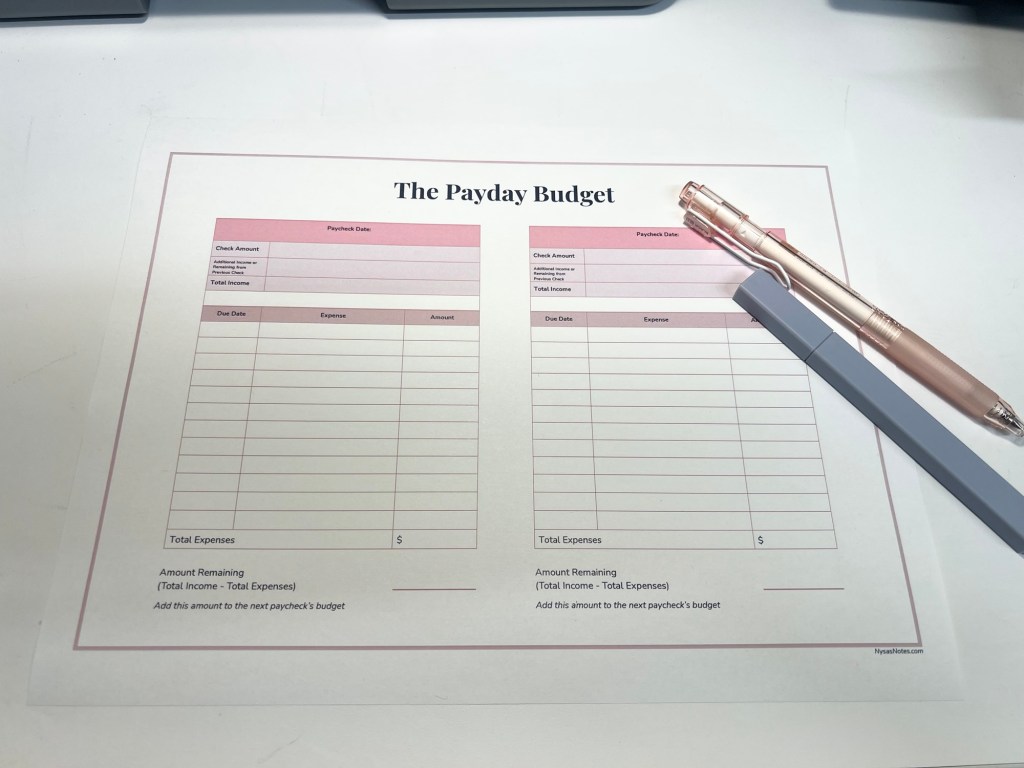
I get paid bi-weekly, so I budget per paycheck instead of for the entire month. I made a cute little worksheet, but a plain sheet of paper works just fine.
So grab some paper and let’s get started.
*The numbers I’m using are just an example. Adjust this based on your income/expenses.
Step 1:
On one half of the page:
- Write the date of your upcoming paycheck.
- Then write down the amount of your check.
- If you have additional income (side hustle money, birthday funds),
include that.
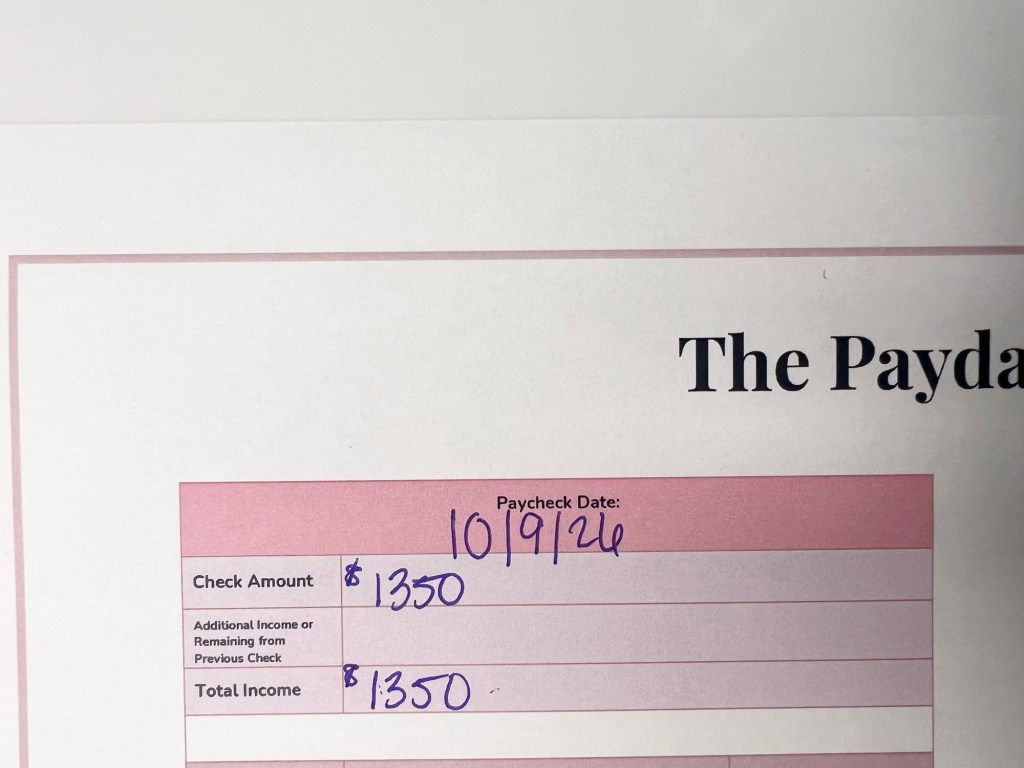
In this example, I don’t have additional funds to add, so my total income is the same as my check amount.
Step 2:
- Make a list of all your expenses that are due between this paycheck and your next paycheck.
- Add the total of those expenses and write it down.
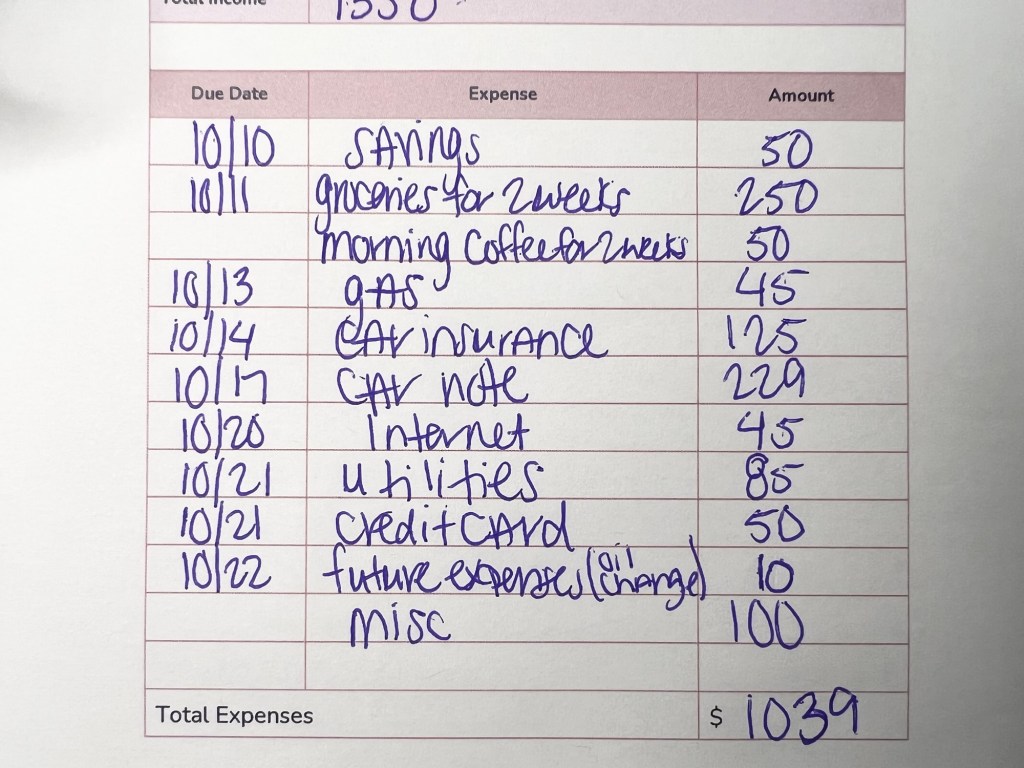
Be sure to include everything you spend money on.
Step 3:
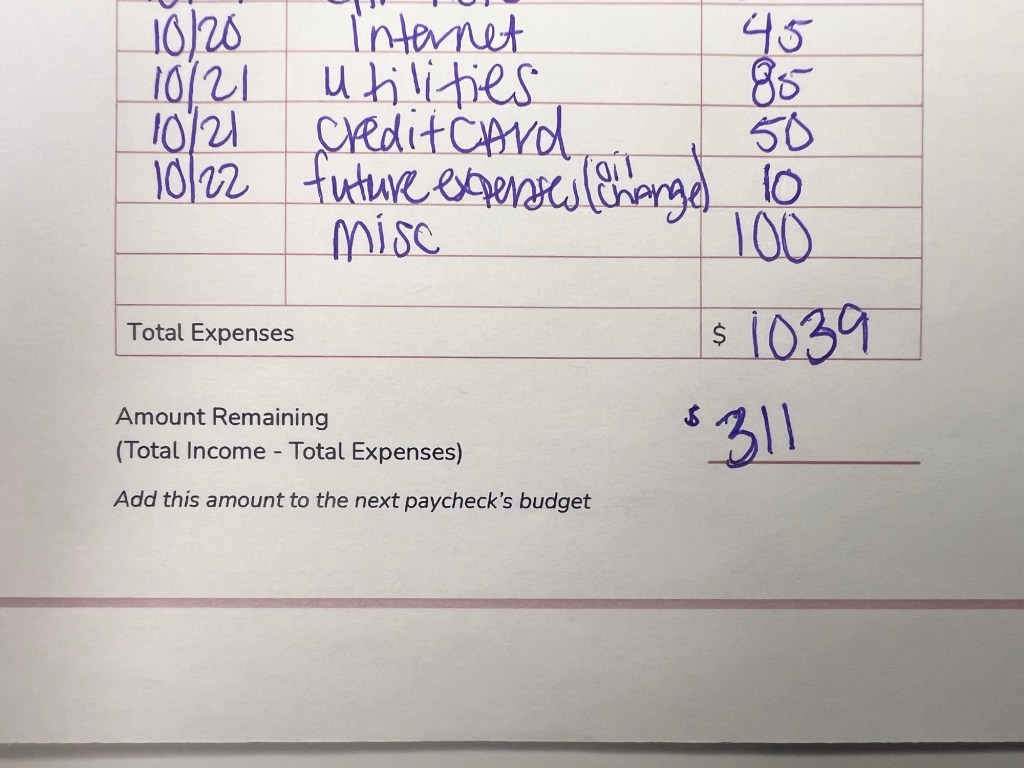
- Subtract your total income from your total expenses and write that down.
Hold on to this number because we’ll need it later.
Step 4: Your next paycheck
- On the other half of the page, write the date of your next paycheck.
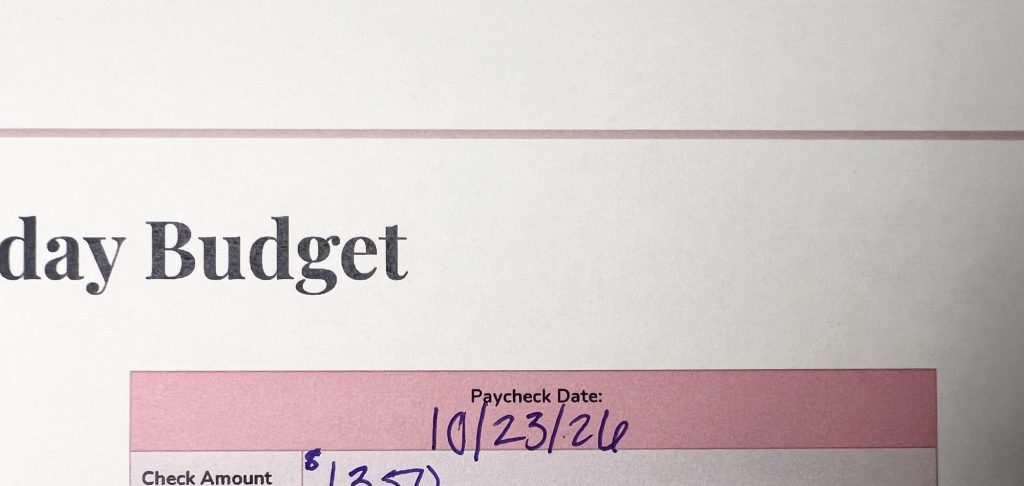
Step 5: My favorite part!
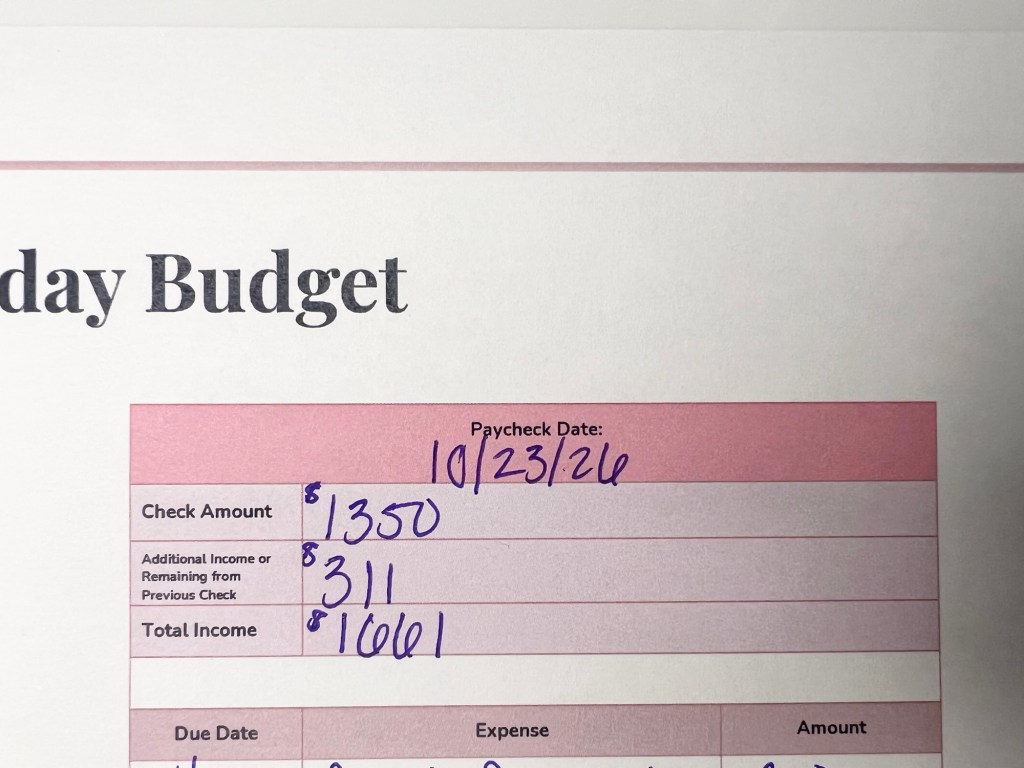
Just like before, write down the amount of this paycheck + any additional funds you have. And now, include the number from earlier. If you had money left over from your last paycheck, add that money to this paycheck. You’ll see why in the next step.
In this example, we had $311 left over from the previous check, so we’ll add that to this paycheck. Which brings the total to $1,661.
Step 6:
Like before, list all expenses due out of this paycheck and write down the total.
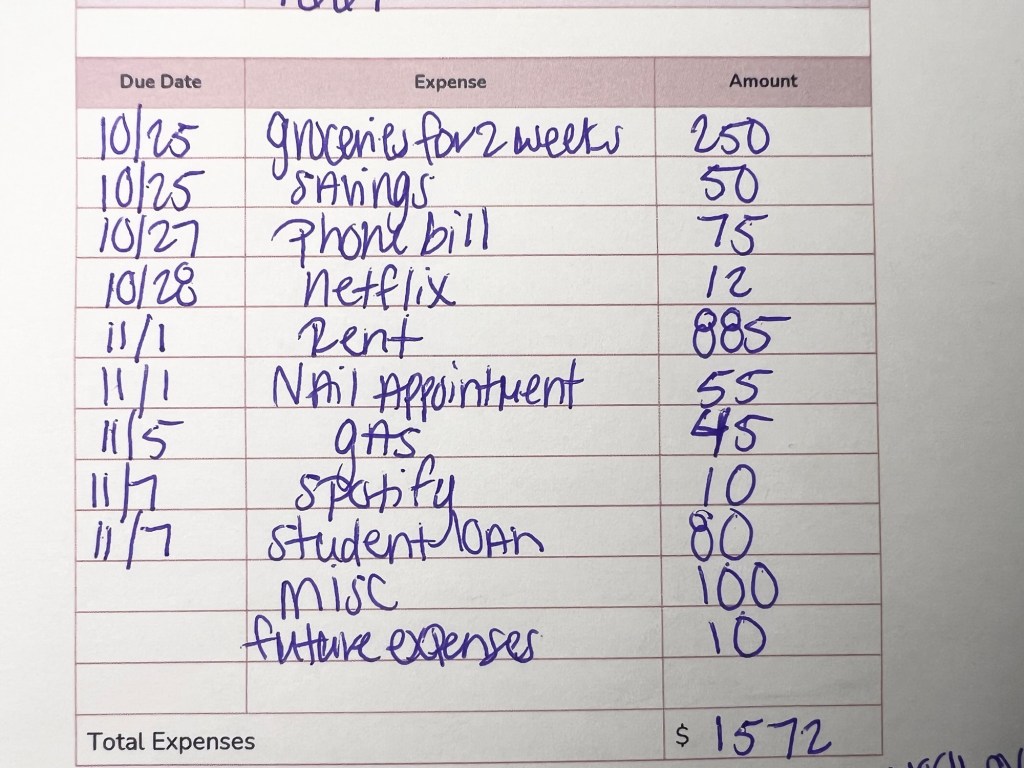
As you can see in this example, the total expenses ($1572) are more than the paycheck ($1350).
This is why we needed to save the leftover money from the previous paycheck ($311). Otherwise, this paycheck would not have covered all of the expenses.
Step 7:
Subtract the total income from the total expenses. ($1,661 – $1,572)
Once again, there should be money left over.
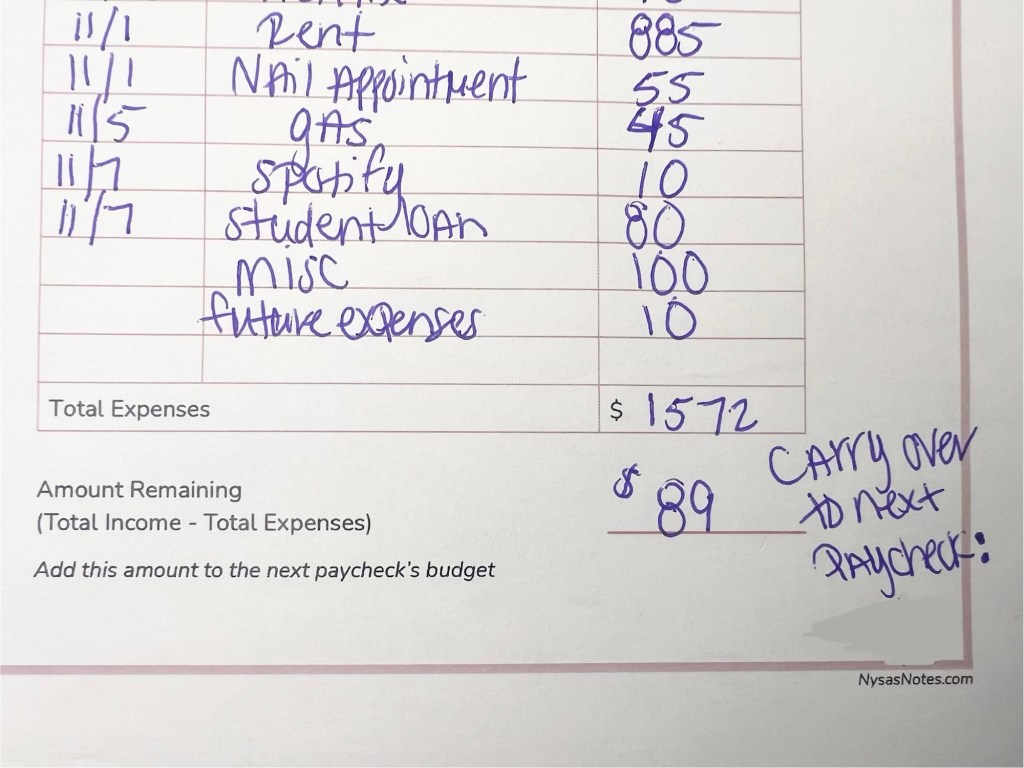
You can either save this or add it to your next paycheck.
So grab another sheet of paper and keep going!
Repeat these steps with your future paychecks.
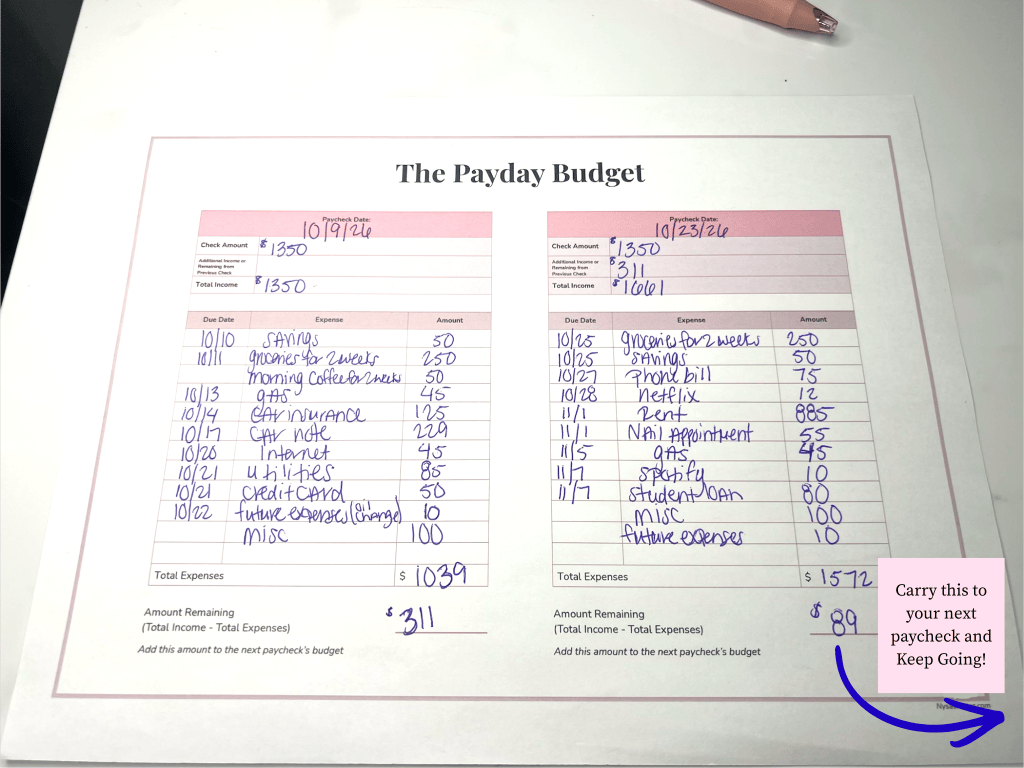
The goal of this bi-weekly budget is to gain clarity on how your money flows–how it comes in, how much you need to set aside, and what each paycheck needs to cover.
What I like about this budget is that it truly moves with you. Your basic expenses might be the same each month, but if you’re paid bi-weekly, your pay dates are always changing, which means how and when you pay things might need to change too. And that’s why this budget is perfect.
Very soon I’ll be sharing more about my debt, bankruptcy, and how I’m rebuilding my life.
In the meantime, I hope you found this helpful. Leave a comment and let me know which budgeting format works best for you.




Leave a comment